
Why Choose a Flat 4K HDMI Cable?
If you are mounting a TV flush against the wall or running wires under a rug, a standard round HDMI cable can be a nightmare. It creates unsightly bulges under carpets and puts dangerous stress on your TV’s HDMI ports when squeezed into tight spaces.
Flat 4K HDMI cables are the solution for clean, invisible home theater setups. They offer the same high-speed 18Gbps (or 48Gbps) performance as round cables but with a low-profile design that slides easily behind baseboards, under doors, and beneath flooring.
Understanding HDMI Cable Types
To get the most out of your 4K setup, it’s important to choose the right type of HDMI cable. Here, we will explore the main options for your setup: Premium HDMI cables (best for 4K) and High Speed cables (good for standard 1080p/4K @ 30Hz).

Premium HDMI Cables
Premium HDMI cables are designed to ensure reliable performance for 4K/UltraHD content at up to 18Gbps bandwidth. Features include support for 4K60, HDR, and expanded color spaces. These cables are authenticated and verified through the Premium HDMI Cable Certification Label from HDMI LA.
| Feature | Details |
|---|---|
| Bandwidth | Up to 18Gbps |
| Supported Resolution | 4K60 (60Hz) |
| Additional Features | HDR, Expanded Color Spaces |
For a deeper understanding of why these cables are preferred for modern setups, check our guide on the best HDMI cables for 4K TV.
Best Flat High Speed HDMI Cables for 4K
High Speed HDMI cables are excellent for video resolutions of 1080p and beyond. They support up to 10.2Gbps bandwidth and are compatible with advanced display technologies such as 4K at 30Hz, 3D, and Deep Color. These cables are ideal for connecting 1080p HD displays to HD content sources, like Blu-ray Disc players.
| Feature | Details |
|---|---|
| Bandwidth | Up to 10.2Gbps |
| Supported Resolution | 4K30 (30Hz) |
| Additional Features | 3D, Deep Color |
For budget-friendly options, consider our list of affordable 4K HDMI cables.


Key Features of HDMI Cables
When selecting the best HDMI cables for 4K TV, it’s essential to understand the key features that ensure optimal performance. Here, we discuss bandwidth and compatibility, HDMI Ethernet Channel, and the evolution from HD to 4K.
Bandwidth and Compatibility
Bandwidth is crucial for HDMI cables as it determines the amount of data that can be transferred between connected devices. Higher bandwidth is necessary to support advanced video resolutions and features. For instance, the latest HDMI 2.1b cables can support a bandwidth of up to 48Gbps, which is necessary for uncompressed 8K@60Hz and 4K@120Hz video resolutions.
| HDMI Specification | Maximum Bandwidth | Supported Resolutions |
|---|---|---|
| HDMI 1.4 | 10.2 Gbps | 4K@30Hz, 1080p, 3D |
| HDMI 2.0 | 18 Gbps | 4K@60Hz, HDR |
| HDMI 2.1 | 48 Gbps | 8K@60Hz, 4K@120Hz |
High Speed HDMI Cables, for example, are designed for handling 1080p and beyond, supporting features like 4K@30Hz and HDR with a bandwidth of up to 10.2Gbps. On the other hand, Premium HDMI Cables can manage 4K@60Hz and possess a bandwidth of up to 18Gbps, ensuring reliable performance for Ultra HD signals.
HDMI Ethernet Channel
The HDMI Ethernet Channel is an innovation that allows HDMI cables to transmit data between Internet-enabled devices without the need for additional Ethernet cables. This feature is available in High Speed and Premium HDMI Cables, offering convenience and reducing cable clutter. It facilitates direct device-to-device connection capabilities, enabling functions such as device networking and Internet sharing among connected devices.
The Ethernet channel combines video, audio, and data into a single cable, simplifying setup and enhancing connectivity within home entertainment systems. This feature is particularly useful as more devices today are smart and network-enabled, requiring seamless communication for optimal performance.
For more insights on choosing the right HDMI cables, visit our page on affordable 4k hdmi cables. If you’re considering longer connections, check our guide on long 4k hdmi cables.
With the right HDMI cable, including features like high bandwidth, Ethernet capabilities, and support for 4K/8K resolutions, users can enjoy a seamless and high-quality viewing experience.
![Cable Matters [Ultra High Speed HDMI Certified] 3-Pack 48Gbps 8K](https://m.media-amazon.com/images/I/41T44jZo+PL._SL500_.jpg)


The 3 Best Use-Cases for Flat HDMI Cables
1. Running Under Rugs and Carpet The most popular reason to buy a flat HDMI cable is to hide a cable run across a room. Unlike round cables, which create a tripping hazard and a visible ridge, flat cables lay flush against the subfloor.
- Pro Tip: Look for a flat cable with a braided nylon jacket if it will be in a high-traffic area to prevent crushing the internal copper wires.
2. Tight Wall Mounts Modern ultra-thin TV mounts often leave less than an inch of space between the TV and the wall. Standard round connectors can protrude too far, forcing the cable to bend at a sharp 90-degree angle. This causes signal dropouts over time. Flat cables are naturally more flexible and have a slimmer connector profile, reducing strain on your TV’s ports.
3. Hiding Along Baseboards If you can’t go through the wall, flat cables are easy to adhere to the top of a baseboard or slide between the carpet and the wall trim. Their shape allows them to blend in seamlessly, especially if you choose a white flat cable to match your trim.
Does the Flat Shape Affect 4K Performance?
When choosing flat 4K HDMI cables, several factors can significantly influence their performance. Understanding these elements ensures that you select the best cable for your setup.
Cable Distance Considerations
The length of an HDMI cable can impact its performance, particularly with high-resolution signals. As the cable length increases, the potential for signal degradation or loss can also increase.
- Short Cables (up to 15 feet): Generally, no significant loss of signal quality.
- Medium Cables (15-50 feet): May require high-quality or active cables to maintain signal integrity.
- Long Cables (50 feet and beyond): Typically require fiber optic HDMI or active cables with built-in amplifiers to prevent signal loss.
For those needing longer cables for their setups, consider looking into long 4K HDMI cables that ensure high performance over greater distances.
Certification and Labeling
Certification ensures that the HDMI cable meets specific standards for performance and reliability. Key certifications to look for include:
- Premium HDMI Cable Certification: Verifies that the cable can reliably handle 4K/UltraHD signals at up to 18 Gbps, including features like 4K60, HDR, and expanded color spaces.
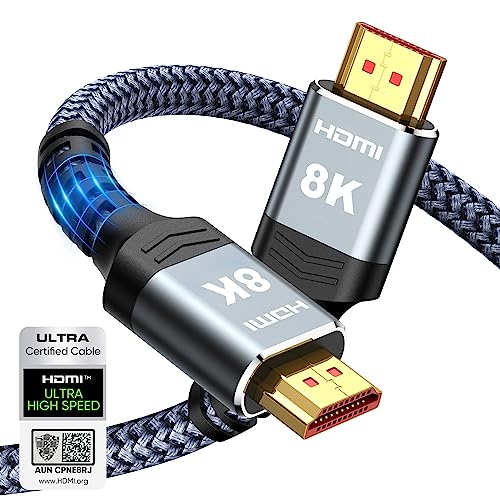
- Ultra High Speed HDMI Certification: Ensures the cable can handle the maximum bandwidth of 48 Gbps required for HDMI 2.1b specifications.
Certification labels, like those provided by HDMI LA, indicate that a cable has been tested for specific standards. Non-certified cables may underperform, especially with high-bandwidth requirements like 4K or 8K resolution.
For purchasing authentic and certified cables, consider checking 4K HDMI cables online. Ensure reliable performance by opting for well-certified cables.
Understanding these factors is key to selecting the best flat 4K HDMI cable for your needs. For more information on affordable options, check out our guide on affordable 4K HDMI cables.
Do Flat HDMI Cables Have Worse Picture Quality?
The Crosstalk Myth A common misconception is that flat HDMI cables suffer from “crosstalk” (interference between wires) because the internal wires run side-by-side rather than twisted together.
The Reality: High-quality flat 4K cables use individual shielding for each internal wire pair. As long as you purchase a cable that is Premium Certified or rated for 18Gbps, a flat cable will deliver the exact same picture and audio quality as a round cable.
Durability Considerations While flat cables are excellent for flexibility, they have one weakness: side-to-side bending. A flat cable bends easily up and down (like a belt), but trying to force it to turn a sharp corner sideways can damage the wiring. When installing, always fold the cable gently at corners rather than twisting it.
Advanced HDMI Cable Technologies
When it comes to choosing the best hdmi cables for 4k tv, understanding advanced HDMI technologies is crucial. This section examines HDMI 2.1 specifications, fiber optic cable options, and enhanced audio and video support.
HDMI 2.1 Specifications
HDMI 2.1 is a significant upgrade over previous versions, increasing the maximum supported resolution up to 10k. With this advancement, it is capable of delivering higher frame rates (e.g., 120fps for 4k) and supports lossless audio output.
Key features of HDMI 2.1:
- Display Stream Compression (DSC) 1.2a: Offers visually lossless compression for ultra-high-definition (UHD) video, with a maximum compressed bandwidth of 128 Gbps.
- Dynamic HDR: Ensures that each moment of a video is displayed at its ideal values for depth, detail, brightness, contrast, and wider color gamuts.
- Quick Media Switching (QMS): Eliminates the delay that can result in blank screens before content is displayed.
Fiber Optic Cable Options
Fiber optic HDMI cables are essential for maintaining signal quality over long distances, especially for high-resolution video outputs like 4k and 8k. Unlike traditional copper cables, fiber optic cables provide reliable performance without degradation over long cable runs.
| Cable Type | Max Resolution | Max Distance | Source |
|---|---|---|---|
| Light-Link 4k HDMI 2.0 | 4K | 300 ft | Sewell Direct |
| Light-Link 8k HDMI 2.1 | 8K | 100 ft | Sewell Direct |


Enhanced Audio and Video Support
The HDMI 2.1 standard also introduces Enhanced Audio Return Channel (eARC), which supports higher-quality audio bandwidth and speed. This feature is not backwards compatible with the existing ARC (Audio Return Channel), offering a more immersive audio experience for home theater systems.
Advantages of eARC:
- Supports high bitrate audio formats: Such as Dolby Atmos and DTS:X.
- Greater audio quality: Up to 192kHz, 24-bit uncompressed audio.
- Synchronization: Improved lip sync capabilities.
By exploring these advanced HDMI cable technologies, tech enthusiasts and video/audio lovers can make informed decisions. Whether it’s delving into HDMI 2.1 specifications or selecting fiber optic solutions for long-distance applications, the right choice can significantly enhance the viewing and listening experience.
For more details on affordable high-quality options, check our guide on affordable 4k hdmi cables.
Ensuring Signal Quality
Maintaining the signal quality of flat 4K HDMI cables is crucial for an optimal viewing experience. Below are essential considerations for ensuring high-quality HDMI cable performance.
HDMI Surge Protection
HDMI surge protection is vital to safeguard your equipment from power surges that can damage HDMI ports and connected devices. Surge protectors, such as Eaton’s inline HDMI surge protector (Model Number B110-SP-HDMI), are designed with lower line capacitance and impedance to avoid Transition Minimized Differential Signaling (TMDS) loss, thereby enhancing signal quality. For more information, visit Eaton’s HDMI Explained.
HDMI Cable Maintenance
Regular maintenance of HDMI cables ensures long-term performance and reliability. Here are some essential tips for maintaining your flat 4K HDMI cables:
- Avoid sharp bends: Ensure that cables are not kinked or sharply bent, as this may damage the internal wiring.
- Proper storage: Store cables neatly coiled when not in use to prevent tangling and physical damage.
- Cleaning connections: Periodically clean the HDMI connectors with a dry cloth to remove dust and debris, ensuring a secure connection.
Proper maintenance practices help in preserving the integrity of the signal transmission, resulting in a seamless video and audio experience.
Future-Proofing Your Setup
Future-proofing your setup is essential to accommodate the rapidly advancing technology in video and audio transmission. Here are key considerations to ensure your system remains relevant:
- Bandwidth Requirements: For 4K resolution at high frame rates, HDMI cables must support bandwidths up to 18 Gbps. With the advent of 8K and higher resolutions, cables will need to support bandwidths up to 48 Gbps.
- Certification and Labeling: Opt for certified cables by agencies like DPL-Labs to ensure they meet performance standards for 4K, 60fps, 18 Gbps bandwidth, and HDR.
- Advanced Technologies: Consider cables that support HDMI 2.1 specifications, which include features like Enhanced Audio Return Channel (eARC), Variable Refresh Rate (VRR), and Quick Media Switching (QMS).
Ensuring that your setup is equipped with high-quality, future-proof cables will help maintain optimal performance and compatibility with the latest technology trends.
| Feature | Description | Importance |
|---|---|---|
| Surge Protection | Protects against power surges | Essential for device safety |
| Bandwidth | Up to 48 Gbps for 8K support | Crucial for high-definition content |
| Certification | Verified by agencies like DPL-Labs | Ensures performance standards |
| HDMI 2.1 Support | Advanced audio and video features | Future-proofing your setup |
For more insights and advice on maintaining the signal quality of your HDMI cables, check out our related articles on Gaming HDMI and affordable 4K HDMI cables.